Navigating AI in Education: The Human Element
Artificial intelligence is changing how we work, create, communicate, and learn. But it is not arriving in schools on neutral ground.
Schools are already wrestling with lack of alignment, drift, fragmentation, dehumanization, instructional erosion, and uncertainty about the future. So the real question is not simply whether students should use AI. The more important question is this:
Will AI help schools become more coherent, more purposeful, and more human—or will it accelerate the very conditions already pulling them apart?
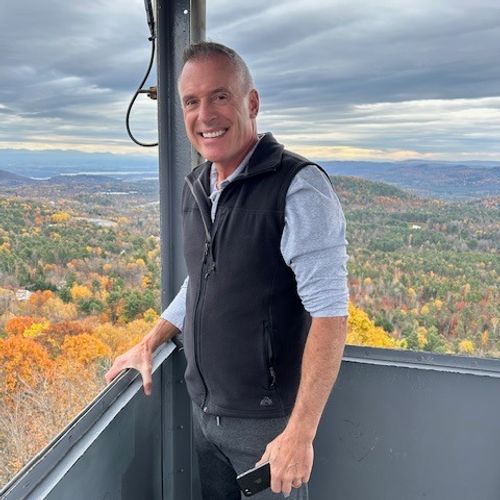
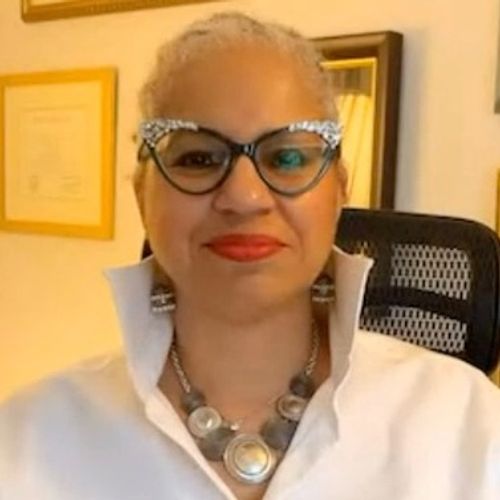
In this episode, Donna McAndrews and Chris Miciek join us to explore what human-centered learning looks like in the age of artificial intelligence.
Together, we examine both the promise and the risk of AI in education. AI can expand access, spark creativity, support inquiry, and open possibilities for learners. But it can also make it easier to substitute production for thinking, efficiency for relationship, and polished answers for genuine understanding.
That is why this conversation is ultimately about much more than technology.
It is about purpose.
What should learning accomplish? What capacities do young people need in a future we cannot fully predict? What can technology strengthen—and what should we never hand over to it?
Perhaps most importantly, how do we ensure that students remain active participants in their own learning rather than becoming increasingly dependent on the tools designed to support them?
AI is not a seventh condition affecting schools.
It is an amplifier.
Without alignment, it can create more drift. Without coherence, it can deepen fragmentation. Without strong instructional purpose, it can accelerate instructional erosion. And without an unwavering commitment to human dignity, it can create even greater distance between people.
But used thoughtfully, AI can also help us imagine something better.
The challenge before schools is not to resist change. It is to make certain that as education changes, we do not surrender the human purposes that make learning matter in the first place.
Takeaways
- AI is entering schools that are already facing significant challenges around alignment, coherence, instruction, humanity, and the future.
- The most important question is not whether students should use AI, but how its use supports—or undermines—the purposes of learning.
- AI can amplify existing problems such as fragmentation, dehumanization, and instructional erosion, but it can also expand access, creativity, inquiry, and possibility.
- Human-centered learning requires us to protect curiosity, agency, critical thinking, judgment, relationships, and genuine human connection.
- Schools need more than AI policies and guardrails. They need clarity about what learning is for and what young people need to become.
- The future of education will not be determined by what artificial intelligence can do. It will be shaped by the choices we make about what technology should support—and what must remain unmistakably human.
Follow Students Matter, LLC on Instagram or LinkedIn.
Connect on LinkedIn with each of us individually: Kathy Mohney, Michael Pipa, Dr. Alicia Monroe, and Dr. Grant Chandler.
To learn more about the Students Matter Ecosystem, stop by:
Until next time, remember:
Every student matters. Every educator matters. And what we create together matters.
Stay Oriented.
Transcript
Artificial intelligence is already changing how we work, create, communicate, and learn.
Speaker A:But it's not entering schools on neutral ground.
Speaker A:It's arriving in educational environments already wrestling with misalignment, drift, fragmentation, dehumanization, instructional erosion, and deep uncertainty about the future.
Speaker A:And that raises a question far more important than whether students should be allowed to use AI.
Speaker A:Will this technology help schools become more coherent, more purposeful, and more human?
Speaker A:Or will it accelerate the very conditions already pulling them apart?
Speaker A:Today, Donna McAndrews and Chris Massick join us to explore human centered learning in the age of artificial intelligence.
Speaker A:We will talk about what technology can support, what educators must never surrender, and why the future of learning will not be determined by what AI can do.
Speaker A:It will be determined by what human beings decide on learning is for A new episode of the Wheelhouse begins right now.
Speaker A:Welcome to the Wheelhouse, where we explore the ideas, conditions, and leadership choices that shape what students experience in our schools.
Speaker A:I'm Dr. Grant Chandler, along with the Wheelhouse team of Kathy Mone, Michael Pipa, and Dr. Alicia Munro.
Speaker A:Throughout this season, we've been examining six conditions affecting schools.
Speaker A:Lack of judgment drift, fragmentation, dehumanization, instructional erosion, and future confusion.
Speaker A:These conditions do not exist in isolation.
Speaker A:They overlap.
Speaker A:They reinforce one another, and together they influence whether schools become places of possibility or places where students and educators slowly lose connection to the purpose of learning.
Speaker A:Over the past several episodes, we've explored what these conditions mean for dignity, neurodiversity, student voice, mattering curiosity, and inspired teaching.
Speaker A:Today, we bring these conversations into one of the most consequential changes facing education.
Speaker A:The rapid emergence of artificial intelligence.
Speaker A:There is no shortage of discussion about AI in schools.
Speaker A:Should students use it?
Speaker A:Is it cheating?
Speaker A:How do we detect it?
Speaker A:What tools should districts purchase?
Speaker A:What policies should leaders adopt?
Speaker A:These questions matter, but they are not the deepest questions.
Speaker A:The deeper question is whether schools possess enough clarity about learning to decide how AI should and should not be used.
Speaker A:Because artificial intelligence is not a seventh condition, it's an amplifier.
Speaker A:In a fragmented school, AI may produce even greater fragmentation.
Speaker A:In a school experiencing instructional erosion, it may make it easier to replace genuine thinking with polished production.
Speaker A:In an environment where students already feel unseen, it may create even more distance between people.
Speaker A:And in schools struggling with future confusion, the pressure to adopt the newest tools may become a substitute for deciding what young people truly need.
Speaker A:But AI holds tremendous promise.
Speaker A:It can expand access.
Speaker A:It can support creativity.
Speaker A:It can help learners investigate complex questions.
Speaker A:It can remove barriers and open possibilities that were previously unavailable.
Speaker A:The question is not at all whether AI is inherently good or inherently dangerous.
Speaker A:The question is whether we will approach it with purpose, judgment, and humanity.
Speaker A:Donna McAndrews and Chris Massick join us today to help us explore what human centered learning should mean in this new era.
Speaker A:Donna McAndrews is currently the librarian in a high school in upstate New York, where she's the founder and advisor of the school's Academic Resource center, which is a peer tutoring center run by students.
Speaker A:Previously, Donna was an elementary librarian and a high school English teacher.
Speaker A:Her favorite role is working with classroom teachers during the research process and helping young people navigate the information environment effectively, deliberately, and ethically.
Speaker A:She's received many accolades for her work, including the recent Murray Award in her school district.
Speaker A:She's been selected by NCTE for presentation at their national conference.
Speaker A:She was chosen for the inaugural Library Media Specialist of the Year Award by the New York State English Council, and she received the New York State School Boards Association's Champions of Change Award for her work with the Academic Resource Center.
Speaker A:Chris Masic is a career development leader currently at Thomas Jefferson University.
Speaker A: velopment and higher ed since: Speaker A:He's an advocate, teacher, mentor for developing strong ethics around AI in hiring and in the workplace.
Speaker A:We thank them very much for joining us today.
Speaker A:So what parts of learning can technology strengthen?
Speaker A:What parts of learning must remain unmistakably human?
Speaker A:And how do we ensure that AI expands student agency and rather than replacing it?
Speaker A:And how do we prepare young people for a future we cannot clearly predict without reducing education to training for the newest technology, the future of learning will not be determined by what artificial intelligence is capable of producing.
Speaker A:It will be determined by what we choose to protect, what we choose to cultivate, and what we refuse to surrender.
Speaker A:Let's get oriented.
Speaker A:Good morning.
Speaker A:I'm Dr. Grant Chandler, and here we are again in the wheelhouse.
Speaker A:Mid August, summer is flying by.
Speaker A:I said that for Kathy, who's not here today, but here we are in August as Labor Day quickly approaches.
Speaker A:I'm with the amazing wheelhouse team of Michael Pipa and Alicia Monroe.
Speaker A:Good morning.
Speaker A:Good morning.
Speaker B:Good morning.
Speaker A:There's the choir again.
Speaker A:How are you all?
Speaker B:It's a lovely, lovely morning here.
Speaker A:That is awesome.
Speaker A:It's kind of warm here already.
Speaker A:So, you know, I'm upstairs in the recording studio and it's a little warm.
Speaker A:I Probably should have turned the air on this morning, but I did not.
Speaker A:So Kathy is away having a blast on a mountain somewhere near, nearby.
Speaker A:So we will say hello to her and we'll see her next week.
Speaker A:This is going to be a pretty phenomenal conversation, as they all are.
Speaker A:But I've been wanting to talk about AI again since we had Dr. Janice Gobert on the show a few seasons ago, and she was absolutely brilliant.
Speaker A:And we have more brilliance joining us today to talk about this topic, I hope in a way that you don't hear the topic talked about very often.
Speaker A:So what I'm hoping is, what I know you're going to hear is a very real, very honest, very interesting conversation around the six conditions of school and what AI brings to the table and what it doesn't bring to the table with some brilliant folks.
Speaker A:So let me bring them on board here now.
Speaker A:Donna McAndrews and Chris Messick, welcome to the Wheelhouse.
Speaker C:Thank you.
Speaker D:Thank you.
Speaker A:It is great to have you here, and we've been looking forward to this conversation for quite a while.
Speaker A:So thank you for joining us on this Tuesday morning.
Speaker A:I'm just going to throw out just some thoughts that I put in the intro.
Speaker A:You know, you go anywhere on any piece of social media or any,.
Speaker C:Any.
Speaker A:Area, you hear people talking about artificial intelligence, talking about how it's changing how we work, how we create, how we communicate and how we learn.
Speaker A:Of course it is.
Speaker A:Of course it is.
Speaker A:And, you know, schools are no different than that.
Speaker A:However, the conversation has to be bigger than just, should our kids use it?
Speaker A:Should our kids not use it?
Speaker A:Should our teachers use it?
Speaker A:Should our teachers not use it?
Speaker A:And let's think about.
Speaker A:Let's think about the six conditions that schools were already facing before AI came around, right?
Speaker A:Lack of alignment, drift, fragmentation, dehumanization, instructional erosion, and future confusion.
Speaker A:AI isn't the seventh condition.
Speaker A:It amplifies all the other six.
Speaker A:And we're going to talk about artificial intelligence in the world of education with two brilliant folks.
Speaker A:So thank you for joining us today.
Speaker B:Thanks, Matt.
Speaker A:A pleasure.
Speaker A:So I'm just gonna jump in with my first question because in true wheelhouse fashion, who knows where this conversation is going to take us?
Speaker A:So my first question for all of us is, what happens when a powerful new technology enters in an environment that has not yet resolved what it values, where it's going, or what learning should feel like?
Speaker A:So schools are already struggling with all of those issues, and now enter something as powerful as AI what happens?
Speaker D:Well, I'll jump in on that.
Speaker D:One, I feel like we saw it when Internet first happened.
Speaker D:I mean, those of us who were there at the time, and I think what we saw then was a lot of fear, but mixed with curiosity and then a movement to have the tools in schools, even though we hadn't quite reckoned with them.
Speaker D:So we had this period of time where we were kind of learning how to use it while it was out there.
Speaker D:And I feel like AI is very similar and I think it's just moving a lot faster.
Speaker D:And in this case, I feel like we're in a good position because we, we already went through some of that.
Speaker D:So some of what we are doing now with AI really reflects how we learned to approach evaluating sources and information and just navigating the information environment from that time.
Speaker C:One grant, I like that your opener that this isn't a new problem, it's exacerbating existing ones.
Speaker C:Exactly.
Speaker C:I think that's been a missing piece of a lot of the conversations I've seen over the last three years.
Speaker C:Or people will bring things up to be argumentative but not actually get the solution.
Speaker C:I think that's important to kind of get into that.
Speaker C:This is unveiling or revealing a lot of systemic problems in education and broader in society.
Speaker C:Alicia I, being in career development spaces, know that there's this huge need for critical thinking skills.
Speaker C:And this is going to be relevant in the, in all of our AI conversations.
Speaker C:This is a big thing, you know, in a supply, demand kind of economic viewpoint.
Speaker C:What does that tell you?
Speaker C:Critical thinking skills are in short supply.
Speaker C:So if they're in short supply, we're seeing that that's laid bare in the, the AI conversations because there's not a lot of critical assessment going on.
Speaker C:Which is most disheartening, that it's educational sectors that have failed to be really sharp because Don is making a great point.
Speaker C:The Internet, we should have learned how to do this better and we didn't and now we're like jumping in.
Speaker C:But I think it goes to the question we posed a question on, you know, education has not resolved itself in its values.
Speaker C:I'd push back to.
Speaker C:Maybe we have.
Speaker C:We might don't want to be honest with that, but I think we've resolved our values that, you know, from the time of the land grant, universities in the U.S. education, especially higher education in the U.S. has moved further and further into being something that wasn't about character formation and citizen formation and more about feeding workforce development, which I get being in career development, lifelong career development professional.
Speaker C:That sounds like a weird Criticism, But I think we need to be paying attention to the fact that if we're feeding the machine, we're constantly creating this tension that undergird undercuts rather than undergirds the educational mission.
Speaker C:And I think that's where we thinking about AI, whatever.
Speaker C:AI.
Speaker C:First of all, we need to define AI, which isn't happening in most conversations.
Speaker C:It's like, hey, it happened three years ago and now we've got it.
Speaker C: 's like, no, let's go back to: Speaker C:And I think we need to be honest with the fact that there's this underlying tension in what is education for?
Speaker C:And it drives into those all of those six points that you mentioned.
Speaker C:And we're seeing that press.
Speaker C:I got interested in this topic about a decade ago simply because I was seeing the way employers were talking about automation technologies and expectations and going, wait a minute, this is going to further dehumanize the workforce and it's going to be putting pressure on our students.
Speaker C:And I think that's where our attention ends up being.
Speaker C:But we've resolved.
Speaker C:We just don't want to admit we've resolved to be making employers happy as opposed to educating students.
Speaker A:Yeah.
Speaker A:And there's our lack of alignment and there's our drift and there's our fragmentation and all six of those conditions that we are facing.
Speaker A:Michael, Alicia, you want to jump in?
Speaker E:I did.
Speaker E:I wanted to share a lived experience which may actually ground some of our conversation during this episode today.
Speaker E:Over the summer, just a few weeks ago, and Chris is familiar with this, I actually facilitated a really large session at a national conference.
Speaker E:We talked about AI and the integration of AI and human centered systems, as well as bias.
Speaker E:And the room was packed.
Speaker E:And what I noticed, because those Dr. Monroe active conversations still continue.
Speaker E:Right.
Speaker E:Is that people are curious.
Speaker E:They really want to know.
Speaker E:They want to debunk some of the harsh realities that may not be true with AI.
Speaker E:They want to really understand.
Speaker E:A point that I really stress during our session is that AI supplements, not supplants.
Speaker E:Right.
Speaker E:So the human is always in the center of the space.
Speaker E:But also be aware of how AI is coded and that there are.
Speaker E:It's so vast because there's different types of.
Speaker E:Of AI that's actually working in the space.
Speaker E:I truly believe that people are curious.
Speaker E:I think that we have dangerously depended on AI without really understanding the capacity of AI, especially in various systems like education, that the human is supposed to drive the system and the AI in the system is not supposed to drive us.
Speaker E:So I just want to let you know that those active conversations keep happening because even though we may not be an actual face to face space, I'm constantly getting the Dr. Monroe hits.
Speaker E:Can you please establish this more?
Speaker E:Can you tell me more?
Speaker E:Where is that research?
Speaker E:Help me to actually understand.
Speaker E:So it crystallizes.
Speaker E:So I want to understand more about how do we demystify AI so individuals can really begin to process and understand that it could generate a great deal of support and assistance if we as humans take control and move the system forward first with AI supplanting and not supplementing the humans driving and the human capacity.
Speaker B:Want to pick up on Dr. Monroe's one of her themes in her comment, which is, you know which driver is in front?
Speaker B:Is it the human driver or is it the machine driver?
Speaker B:And from your various perspectives, Donna and Chris, when we are directly experiencing the power of a new technology like AI, there are clear benefits and then there are areas of concern that quickly emerge.
Speaker B:And from your, your positions, your unique perspectives, I'm curious about the concerns that are beginning to emerge that you're feeling some sense of urgency about how your organization and you as individuals are going to address those concerns and help your colleagues and your students address those concerns.
Speaker B:So I'm really interested in what you're seeing in terms of those challenges that are emerging with the growing presence of AI as a part of the learning experience.
Speaker D:So coming from the K12 sort of area, one of the things that we've experienced, and I'm at the high school, so my experience is pretty, pretty much working with teachers in classes where research is happening and so students are using resources and then having to create some kind of product of their learning.
Speaker D:So plagiarism is a big issue.
Speaker D:One of the things that quickly.
Speaker D:So I, I would just kind of go back.
Speaker D:Like when Chat GPT first started, it was banned in a lot of K12 schools.
Speaker D:Like it was not allowed.
Speaker D:And then within a very short time we had Chat GPT, Gemini and Magic School on every student Chromebook.
Speaker D:So there was this little tiny window of okay, we're gonna, we're not going to be using this.
Speaker D:And then everything was there and students had access to all of it.
Speaker D:There really wasn't any guidance or there continues to be no policy, but students would be using it.
Speaker D:And then teachers were really struggling with the output this.
Speaker D:The students were turning in things that, you know, we're clearly AI, but how do you address that with a student?
Speaker D:What are the, what does this, how does the school support a teacher who then says, you know, this, this isn't your work.
Speaker D:We've really looked to our code of conduct, which basically just says students are responsible for their own work.
Speaker D:So I would say that one of the things that we've been really facing is how are students going to use it ethically and how do they.
Speaker D:Not just.
Speaker D:Not just with their outputs, but also with their analysis of what the tool is giving them.
Speaker D:So how do you cross reference what the.
Speaker D:What the information says to make sure that it's accurate, since you're still responsible for that?
Speaker D:So those are the things that.
Speaker D:Those are like the real things that we face on a day to day basis because students are using it.
Speaker D:In terms of my work with teachers, it's really about helping them put language in a syllabus so that their students are aware of where it can be used and where it can't.
Speaker D:Now moving to doing that assignment by assignment so that students understand where is the limit.
Speaker D:And our district recently pulled together a committee to create some guidance for staff, students and families so that people would just have a sense of what's okay and what's not okay and that we would all be on the same page.
Speaker D:We haven't rolled it out to our families yet.
Speaker D:I'm hoping that happens early in the year, but I think a lot of districts are doing that.
Speaker D:And like, just looking at New York City, when they first rolled theirs out in March, they got a lot of pushback and people were pretty upset about the lack of specificity.
Speaker D:And yet it started a conversation.
Speaker D:And I really feel like that is where we are right now.
Speaker D:And having understanding that students are using it, it is affecting their learning for better or for worse.
Speaker D:We can talk about more about that, but I feel like families are hungry for guidance and letting us know what our kid is using it.
Speaker D:Is that okay?
Speaker D:Are you guys encouraging that?
Speaker D:Have they talked?
Speaker B:You put it on their Chromebook?
Speaker D:Yeah.
Speaker D:So that's where we are in the K12 world, at least from my perspective.
Speaker C:I mean, I've been arguing.
Speaker C:Alicia knows this.
Speaker C:I've been arguing the language around it is different now, but for really deep AI literacy.
Speaker C:What's passing for AI literacy is how to use a tool which isn't literacy.
Speaker C:Being able to push a button doesn't indicate, you know, the mechanism behind the button or what happens, you know, beyond that button being pushed.
Speaker C:And like I mentioned, I got.
Speaker C:So I think a response needs to be really getting serious about AI literacy.
Speaker C:And that includes something that most of us have never been seriously formally educated on.
Speaker C:And that's ethics.
Speaker C:You know, we maybe got had some ethics show up in a class or something like that.
Speaker C:But we are not broadly speaking, ethics is a skill and broadly speaking, we do not possess that.
Speaker C:And it is an expression of critical thinking.
Speaker C:And we're not ex.
Speaker C:And it's not happening.
Speaker C:So it's really easy for this adoption that goes back to kind of the critical thinking is in such high demand because it's in low supply.
Speaker C:But we need to be pushing into this.
Speaker C:We need to be, you know, working together to do that.
Speaker C:Because ethics is an expression of community values.
Speaker C:And how do those get applied?
Speaker C:And in the higher ed space there's been this jumping in to make sure that the product of a university looks appealing to the customer, which are the employers.
Speaker C:So, you know, there's a whole lot of students need AI skills.
Speaker C:But what is meant by that?
Speaker C:Even BHEF Business Higher Education Forum came out with some kind of version of the NACE Career readiness competencies.
Speaker C:It was all AI based and if you tear it down, only one of the seven things in there actually needs AI.
Speaker C:All the other things were like, they just added AI into the definitions.
Speaker C:But it's like critical thinking and systems thinking and stuff like that.
Speaker C: ll of this stuff predates the: Speaker C:So we need to have that grounding in ethics and we need to bring that into our critical thinking.
Speaker C:And like I mentioned, I got into this, looking at this stuff intently almost a decade ago because I was starting to notice in the journalism spaces that I follow for my work, specific ways technology, automation technologies, algorithmic technologies.
Speaker C:AI was getting talked about.
Speaker C:There were voices that were very clearly not present.
Speaker C:It was very clear who the audiences of these pieces were.
Speaker C:The Reuters Institute at Oxford, I think eight years ago actually called out British journalism for failing to exercise journalistic critique of what was going on.
Speaker C:It's like, look, 60 some percent of the stuff in British press in the past year has basically just been rehashing.
Speaker C:Talking points from companies.
Speaker C:Government and citizens are not involved in the conversations, but this is impacting them.
Speaker C:That's a problem that has, you know, I don't know if they repeated that study, but it was like, yeah, okay, fun thing.
Speaker C:My family had spent a couple of years making fun of me for grousing about this problem.
Speaker C:And then I found in the Reuters report came out and I just kind of was like, so Oxford agrees with me.
Speaker C:That didn't stop it.
Speaker C:They still make fun of me, because that's what you get.
Speaker C:It's sad, but I started paying attention because the harms, and it's much broader, and we've got very specific harms with the large language models that are huge and varied.
Speaker C:I think it's the most problematic version of AI we've got.
Speaker C:But Chris Gilliard was doing work for a long time on AI surveillance economy, including, like, wearables and stuff like that.
Speaker C:And where's all that data going?
Speaker C:Joy Buolamwini's work, the MIT scholar who did Coded Bias, that documentary that again, predates this current conversation.
Speaker C:You know, Timmy Gebru, the former Google AI researcher and ethicist who was fired for doing her job as an ethicist, And Ruha Benjamin, Safiya Noble, Virginia Eubanks.
Speaker C:There were so many people that a decade or more ago, were laying the groundwork and saying these systems, in one way or another, cause harms.
Speaker C:And that's not to say these aren't powerful technologies.
Speaker C:I love technology.
Speaker C:I'm a technologist.
Speaker C:I mean, I've done, you know, been on the cutting edge of stuff.
Speaker C:But it's also, we need to build up that capacity to critique the system, to critique the tool, to critique the service, and to ask hard questions like, who's profiting?
Speaker C:What are the downstream harms?
Speaker C:If I use this, how is this socializing a student?
Speaker C:What am I modeling for them?
Speaker C:And that sort of thing.
Speaker C:And that all comes back to that.
Speaker C:We need deep AI literacy, and we're settling because we're trying to move so fast.
Speaker C:FOMO is so strong that we're not creating those spaces.
Speaker C:And, Alicia, I've been in those kinds of spaces, too.
Speaker C:I'm knowing you, they're far more electric and interesting than when I'm running the conversation.
Speaker C:But.
Speaker C:But it is.
Speaker C:There's.
Speaker C:People want to know this, but it's really hard to find and create those spaces right now because the press is adapt, adapt, adapt.
Speaker C:And that itself is a problem that was a means of actually eroding or negating pushback.
Speaker C:And that's not what higher education should be about or what education should be about.
Speaker C:It should be about conversation.
Speaker E:So I'm with you, Chris.
Speaker E:I'm tracking with you.
Speaker E:And I know Grant wants to ask the next question, so hold on for a quick section.
Speaker D:Grant.
Speaker E:All right, if we're talking adapt, adapt, adapt, humans should be talking drive, drive, drive, right?
Speaker E:So when I hear adapt, adapt, adapt, right?
Speaker E:We're trying to catch up with AI.
Speaker E:Humans need to be ahead of that.
Speaker E:So that's where it comes in.
Speaker E:I hear Donna saying, we're coming out with this great code of, okay, great.
Speaker E:And then what's the next step?
Speaker E:Because by the time that code goes through the board and everything gets approved, AI will be doing something different.
Speaker E:It will have leveled up in some way.
Speaker E:So is there a plan, as a Pre K through 20 educator, to have this active committee that is always keeping their finger on the post with regard to AI?
Speaker E:I don't know, but these are the conversations that I'm having with Pre K through 12 educators.
Speaker E:Chris, in our space at higher ed, I'm having a conversation.
Speaker E:Conversation, Michael, around ethics.
Speaker E:Right.
Speaker E:And who's setting the ethic and who's sitting around the table that sets the ethic?
Speaker E:Right.
Speaker E:These are the conversations that we need to be having.
Speaker E:And are the right people sitting around the table that really know, is it some of the faculty that are on the front line that are being faced with having to pull in these wonderfully written papers through chat or Claude?
Speaker E:And we know that the student can't put a predicate and a noun in a sentence.
Speaker E:So what I'm saying is, and I'm not taking away from our lovely college scholars, I'm just being a little bit more illustrative with my language.
Speaker E:But what I'm saying is, when we know a student's style of writing is not what we see on a paper, right.
Speaker E:We should be ahead of that to be able to say, hold on for a second, and be able to usher the scholar in with some sort of protocol to be able to better handle the balance within their own thinking that we laud and praise and some assistance that they may receive from AI.
Speaker E:I think these are the conversations that we really need to be actively having with people who really know what they're talking about sitting at the table.
Speaker B:So, Don, I want to jump on that.
Speaker B:And I'm interested if you know in what your experience has been working with students as you push into classrooms where those students are about to start research.
Speaker B:Do you have conversations about the ethical implications of AI as a tool?
Speaker B:What are those conversations?
Speaker B:Like, what does that work?
Speaker C:Like?
Speaker D:Yes, we part of, like the.
Speaker D:Before we do research is looking at how we will we look at AI, the role of AI in the process.
Speaker D:And so far it's really interesting, and it kind of depends on the class and the grade level, but students are really wanting to talk about the ethics of their use of AI.
Speaker D:They are also interested in the bigger picture of, like, the environmental impact.
Speaker D:They want to look at everything about generative AI and the way it is sort of hurtling ahead when they don't necessarily know that they have competency on certain skills.
Speaker D:So one of the things that we talk about before we do research is where.
Speaker D:What.
Speaker D:What are we wanting to learn as part of this process?
Speaker D:Like, what skills do we want to practice?
Speaker D:And where would AI support that learning?
Speaker D:And where would it maybe replace that learning?
Speaker D:And we really want to articulate as a group.
Speaker D:Like, I do this with classes, so the teacher and I will talk to the entire class, like, what are we hoping to learn?
Speaker D:What skills are you wanting to practice?
Speaker D:So it might.
Speaker D:We talk about those things.
Speaker D:And then as a result of that, we create a bit of a contract, like, here's where AI might.
Speaker D:We might be using it.
Speaker D:Well, so with a class of juniors in high school, they know the value of keywords for searching, so they can use AI to support that.
Speaker D:But if I'm working with a class of fifth graders who still don't understand why keywords can be helpful versus natural language, and then allowing them to create a list of keywords is undermining the skill of understanding the use of keywords.
Speaker D:So we need to have a degree of competency before the AI can support the learning.
Speaker D:And so with each class, that's what we're really trying to articulate.
Speaker D:And then as we go through the process of research, we reflect, and the reflection part is critical if they.
Speaker D:If we are only looking like, we might have looked at the research paper years ago, but now, as I'm sure you guys all know, the formative assessments are infinitely more important than the final product because we want to see what has been learned along the way.
Speaker D:So as students reflect on that, that's where we, we have conversations about, was AI useful here?
Speaker D:If we did use it?
Speaker D:If we didn't use it, could it have been useful?
Speaker D:And then I'll just want to add one other thing is that it really, within a group, we have students where we will be using AI to adjust a reading level for an article that we found in a database, because that student has that support in their IEP or something.
Speaker D:So we can use AI for an individual student where the whole class has decided, you know, we won't use AI for our reading.
Speaker D:We're not going to use AI to summarize an article.
Speaker D:We need that skill.
Speaker D:And so I think it's important to like, you know, have a little flexibility in the mix.
Speaker D:But that's what we're doing on a.
Speaker D:On a daily basis with classes and with students.
Speaker D:And I think they are.
Speaker D:They care about their learning.
Speaker D:They are scared of walking out into the world without a skill because AI replaced it before they could master it.
Speaker B:I just find that such a powerful illustration of what Dr. Gobert called the human in the loop.
Speaker B:When you have a teacher who's saying, I'm going to use AI intentionally in order to provide the accommodation for this student who has an IEP for over a reading disability, so I can give them access to this information by using an AI platform that will take that very challenging article currently as it exists in the database, and reinterpret it in new language that is commensurate with that student's reading level, thereby giving them access.
Speaker B:That's very different than simply using AI to create a whole lesson plan where it replaces that human's judgment, that profound professional judgment.
Speaker B:And then you talked beautifully about the reflection piece that's built in for students so they have a moment to pause and to talk to each other about how they perceive the impact of AI and how was it helpful?
Speaker B:Why?
Speaker B:Where might it have been more helpful?
Speaker B:Where was it less helpful?
Speaker E:Well, that's assuming that all teachers have a mastery of that.
Speaker B:That's right.
Speaker B:That's right.
Speaker E:Okay.
Speaker E:And, and, and that's big.
Speaker E:And.
Speaker E:Okay, Don, I'm gonna let you speak because I heard you whisper.
Speaker E:They don't.
Speaker E:You're right.
Speaker D:Well, what I.
Speaker D:What I would say is we.
Speaker D:We are so with kids, like, we're all in this together.
Speaker D:We're just learning it.
Speaker D:Go ahead.
Speaker E:No, I love it.
Speaker E:I love it.
Speaker E:I love a real powerful whisper.
Speaker E:So thank you for that, Don.
Speaker E:AI is such a powerful engine, right?
Speaker E:A powerful engine that has multiple levers, right?
Speaker E:Different complexion, different hues.
Speaker E:It pops in, it pops out, then another one engages.
Speaker E:And it's the technology.
Speaker E:We really have to.
Speaker E:Chris, I'm mapping right back to you.
Speaker E:I'm tracking with you.
Speaker E:We have to have literacy around it, we have to respect it, but then we have to have courageous conversations around it.
Speaker E:And I don't think enough of us have enough understanding or illiterate enough to be able to really have those knowledgeable conversations around the table.
Speaker E:Then we have to let our egos go, right?
Speaker E:Me, me, me.
Speaker E:I'm the intellect and really come around a community understanding of what this AI norm is going to be for us.
Speaker E:So I like to have more conversation around it, because that's what I hear is swirling in this space, right?
Speaker E:What's the dialogue?
Speaker E:Who's the players?
Speaker E:What is literacy?
Speaker E:What is AI literacy?
Speaker E:And how does that impact everyday Practice.
Speaker C:Well, I'm going to jump in on that.
Speaker C:Working off of one of the things.
Speaker C:Donna, I love the fact that the students you're working with are involved and invested and have say in their own education.
Speaker C:I think the educational enterprise, at least where I sit in higher education, has lost sight of the fact that we are educating students for their future and they have more future than we do.
Speaker C:Even though we're all in our 30s.
Speaker A:We're all in our 30s.
Speaker C:Lots of comment I will avoid right now, but that giving them agency, modeling alongside them, that process, and actually entertaining the.
Speaker C:You have ethical concerns.
Speaker C:Let's explore that.
Speaker C:Letting them even lead on some of that.
Speaker C:That's beautiful.
Speaker C:I've heard way too many colleagues in the last year dismiss students in their spaces raising ethical concerns.
Speaker C: use Spring of early spring of: Speaker C: So chatgpt late: Speaker C:And I was asking what happens when they reverse course.
Speaker C:Nobody answered that because.
Speaker C:But now we have evidence.
Speaker C:In the past year, students are reversing course.
Speaker C:The rise of Luddite clubs in high schools and in colleges and beyond.
Speaker C:Dumb phone.
Speaker C:There's other names for it.
Speaker C:I want to keep, I want to keep Grant's work editing down to a minimum.
Speaker C:You know, there was a whole, there was a whole series of events in New York City this summer that was Luddite oriented.
Speaker C:And let's be clear, the Luddites, Brian Merchant's history of them is a fantastic exploration and reclaiming of that real history.
Speaker C:Technologists who were opposed to technology being used to siphon wages and, and worsen working conditions.
Speaker C:And there were generations of harm to communities because of that.
Speaker C:I think we need to get back into that.
Speaker C:Are we educating them to make good hard decision then coming alongside them?
Speaker C:Because if there is not space for legitimate resistance, if there is not a legitimate path to say no, then we are being co opted and coerced and manipulated.
Speaker C:Our agency has been robbed of us or we've just given it up and we've abdicated that.
Speaker C:And as educators, that worries me because we need to be showing them how to build a better future, not preparing them for a crap one that some other people decided would be good for their bank accounts.
Speaker C:What's our.
Speaker C:What are we doing?
Speaker C:And if everyone's like, nope, we're just going to be enriching them with the.
Speaker C:Really the ridiculously wealthy.
Speaker C:Okay, well at least we know what our agenda is.
Speaker C:We'll just get out and we'll just take care of that.
Speaker E:So, Chris, I'd like to like to extend your thought for a moment.
Speaker E:Earlier, Donna and I talked about teachers don't.
Speaker E:Right.
Speaker E:And then we talked about higher ed and faculty and intellects around the space.
Speaker E:Right.
Speaker E:And I just want to extend that.
Speaker E:It's not a dig at teachers or faculty.
Speaker C:Right?
Speaker E:Not at all.
Speaker E:It's about building capacity.
Speaker E:And are we building capacity in a very strategic way where teachers feel empowered so that they can make the choice that students sit alongside them to have those type of research experiences.
Speaker E:Donna, that you actually advocate for in your space.
Speaker E:Right.
Speaker E:Where we're empowering students.
Speaker E:All right.
Speaker E:Who know a lot more about technology than a lot of the teachers and the faculty and the spaces to really have this reciprocal teaching and learning process experience as they move through the Pre K through 20 continuum.
Speaker E:That means that teachers and professors have to become more facilitators of learning and less sages on the stage.
Speaker E:So I think it's about really developing capacity and professionally developing educators to really think and practice differently.
Speaker C:Alicia.
Speaker C:Yes, but how are we going to help individuals and singular units of schools build capacity when we have decades of systemic issues that have continued to rob people of that capacity of the resources we've watched?
Speaker C:I mean, I referenced the land grant at the start of things.
Speaker C:Right.
Speaker C:The land grants were supposed to be a promise to open education to a much vaster part of the American public for workforce development, sure, but to open up access by making it affordable.
Speaker C:And what have we seen for decades?
Speaker C:The dismantling of the finances of the state school systems.
Speaker C:Which blows my mind, because that seems to me like a national economic security issue that we're undermining.
Speaker C:Let's undercut our ability to train up the the future, even if you're just about workforce development, not about education.
Speaker C:We got hit with COVID that was mangled in its response.
Speaker C:And I worked in online education long before that.
Speaker C:I've seen how it can be done well, and I knew that there was over.
Speaker C:There was 15 or 20 years of good online pedagogical research that was waiting to be accessed, and instead we had to pivot so hard and so fast.
Speaker C:Everybody was making up stuff as they went along, and we.
Speaker C:But we didn't recover.
Speaker C:We never recovered from COVID That's not a long Covid comment, but it's a long Covid.
Speaker C:Long Covid is not just a physical symptom or set of ailments.
Speaker C:Systemically, we didn't recover from that.
Speaker C: ities didn't recover from the: Speaker C:I know in career development, the NACE data on offices.
Speaker C: bounded in terms of their pre: Speaker C:People like Donna are fricking heroes of mythic proportions because they're pulling stuff off when most are just in the trenches trying to get by day to day and do their singular best and can't pull everything else together because they keep having the rug pulled out from under them.
Speaker E:So it's not about the teachers or the faculty, it's about those above them.
Speaker E:Right.
Speaker E:So what are the strategic goals?
Speaker E:Right.
Speaker E:What are we doing in districts?
Speaker E:What are we doing on campuses?
Speaker E:If this is not really where we're focused, then the AI space will always be ahead of what we're doing.
Speaker E:Because they're way ahead now.
Speaker E:Right?
Speaker C:Yeah.
Speaker E:Donna is working hard in the trenches and she is a shero.
Speaker E:Right.
Speaker E:Doing that work.
Speaker E:Because I'm quite sure if I have an offline conversation with Donna, she might be one of the fewer only voices in the space.
Speaker E:Right on.
Speaker E:You know, kind of championing that work.
Speaker E:And this takes a lot of folks around the table that are dedicated and understand the urgency around this.
Speaker E:Instead of squawking and saying I got a paper and I knew it wasn't written by this student.
Speaker E:How could we be punitive?
Speaker E:Right.
Speaker E:We need to be ahead of the game.
Speaker E:So Chris, you, you and I and Grant and Donna and Michael, we're all speaking the same language.
Speaker E:But I think where we are befuddled is that we haven't gotten to some plan for resolution yet.
Speaker C:One of the reasons I've been asked this in panels and stuff, why I don't use any LLMs, why I refuse to use Copilot and ChatGPT and all of that, because part of the training process abuses because it's ongoing.
Speaker C:Global South Tech workers, if I'm in career development and my work is about work and people's work and labor conditions work, why do I want to use a tool that is being built by companies that show so little disregard for people because they're on another continent, because they have less protective laws in their, in their country and so on, I'm not going to buy into that.
Speaker C:That's me.
Speaker C:I'm not saying other people have to follow that.
Speaker C:But as communities, do we care about these?
Speaker C:What do we care about and how do we then do that?
Speaker C:We already have that.
Speaker C:So we can build from there and not care about.
Speaker C:Is it a technology?
Speaker C:I think that's the key.
Speaker C:One of the key exercises, Alicia, to get us to where you're at, what you're asking.
Speaker A:So as I sit back and listen to this really, really interesting conversation, I'm putting.
Speaker A:I want to put my.
Speaker A:I'm a teacher in a school somewhere in the United States, right?
Speaker A:Just a regular classroom teacher doing great work.
Speaker A:And what I take away from this conversation is the people who have the power to make some big decisions and to provide some really good guidance aren't doing that.
Speaker A:The guidance is missing in most places.
Speaker A:And so, yes, Donna works in a place that's trying to figure it out.
Speaker A:And thank God they have Donna to help them figure it out.
Speaker A:But a lot of places do not have that.
Speaker A:They don't have anybody trying to figure it out, and they don't have anybody to help them do that.
Speaker A:And so in a lot of places, they're approaching AI as something to implement rather than thinking about AI in the broader scheme of how do we design learning experiences?
Speaker A:What is it we want children to learn?
Speaker A:What is it we want young people to learn moving forward?
Speaker A:How do we prepare them for their future when we don't even know what that future is?
Speaker A:Right?
Speaker A:And Chris, you said it brilliantly.
Speaker A:They have a far longer future than we do.
Speaker A:Right.
Speaker A:In our 30s.
Speaker A:So, I mean, there's so many really, really, really good questions as we get ready to wrap up this episode.
Speaker A:And I'm thinking we're gonna have to bring you all back again.
Speaker A:We say this, we're saying this frequently now to all of our guests, like, okay, we've scratched the surface.
Speaker A:We're gonna have to have this conversation again.
Speaker A:So, you know, invitations coming.
Speaker A:If I'm a classroom teacher anywhere in the Pre K20, doesn't matter where I am.
Speaker A:What's something I should be thinking about right now as we wrap up this session?
Speaker A:Be very practical for me.
Speaker A:What is it that it's August.
Speaker A:School starts soon.
Speaker A:The university level and also in the pre K level.
Speaker A:What's something I should be thinking about right now?
Speaker A:We'll just go around the.
Speaker A:We'll go around the room here.
Speaker A:Donna, what's something you would like teachers to be thinking about in this context of this conversation?
Speaker D:Well, selfishly, I would say work with your librarian, because we have been thinking about information literacy, media literacy, and now AI literacy for a long time.
Speaker D:And we love to work with other people to bring that learning into the curriculum that you're already trying to implement.
Speaker D:So that would be one thing I would also say the other thing you know, trust your trust what you know about learning.
Speaker D:Students need productive struggle.
Speaker D:They need to be resilient.
Speaker D:And excessive use of generative AI can undermine that resilience for kids.
Speaker C:So resistance is growing globally.
Speaker C:You're not alone if you have questions.
Speaker C:It doesn't.
Speaker C:I'm not saying start throwing your sabots into the machinery, but find and listen to the nodes of resistance.
Speaker C:What are the concerns?
Speaker C:Let that broaden your perspective.
Speaker C:Not to guilt trip yourself, not to let other people guilt trip you, but to become more informed so you can start exercising your critical thinking, you can start exercising your ethical thinking and start to ask the hard questions.
Speaker C:That as educators, is our responsibility to do and model that.
Speaker C:And bring it all back to the simple question, is my practice and my choices improving the agency of my students or is it diminishing it?
Speaker C:And what that answer is and agency is not, can get a good job after school.
Speaker C:That's not agency.
Speaker C:Agency is bigger than that.
Speaker C:So if you can answer that question, then you know where you're going.
Speaker A:And that's a pretty profound question.
Speaker A:Would you repeat that question one more time?
Speaker C:Ask yourself.
Speaker C:Is my practice are my decisions as an educator and educators are the librarians, they are the teachers in the room, they are the staff that are coming alongside students in K12 and in universities.
Speaker C:Are my decisions around technology or anything improving my students agency or diminishing it?
Speaker A:That's a pretty profound question.
Speaker B:Yeah, I was.
Speaker B:Chris, you took the words right out of my mouth.
Speaker B:And it's what I'm hearing in your work.
Speaker B:Dee is centering the idea of student authority over their learning, how they're going to learn what skills they are interested in obtaining.
Speaker B:And I happen to know for a fact that the conversation that you are part of in your district, you are part of a much larger conversation that goes beyond your district because you're a member of a group of library media specialists from around the region and you presented recently at a conference on the topic of AI.
Speaker B:So that conversation isn't just happening in an isolated place, it's happening everywhere.
Speaker B:And to me, that's the important lesson that I'm hearing.
Speaker B:How do we work together as educators to make sure we're doing right by student agency, by exercising our own agency as educators?
Speaker B:And how do we participate in the conversation in our buildings, in our district and beyond in ways that help us share really good practice, learn really good practice?
Speaker B:So just want to lift that up.
Speaker A:Alicia, do you want the last word today?
Speaker E:Not necessarily the last word, but I just wanted to share.
Speaker E:What has been resonating with me throughout this entire episode is academic freedom.
Speaker E:And how do we truly define academic freedom?
Speaker E:And so my question of reflection is, how can we grow to better understand?
Speaker E:And when we sit in that space, academic freedom of yesteryear looks very different than academic freedom of today.
Speaker E:And we have these conversations in faculty spaces oftentimes, but it doesn't trickle down to our student population.
Speaker E:So what is academic freedom for students?
Speaker A:Right.
Speaker E:And how are we defining that?
Speaker E:And as we define that, are students also sitting around a table so their voices are heard as to what academic freedom is for them?
Speaker E:So that really connects to.
Speaker E:To agency and efficacy, and I think that's a good place to sit as we prepare to welcome students back to our campuses and in our schools in a few weeks.
Speaker A:That brings us to the end of this episode of the Wheelhouse.
Speaker A:I want to thank Chris and Donna for joining us, and we'll see you next time.
Speaker A:Today's conversation reminds us that the arrival of artificial intelligence is.
Speaker A:Does not release educators from the responsibility to make thoughtful choices.
Speaker A:It makes that responsibility even greater.
Speaker A:AI can generate information.
Speaker A:It can produce language.
Speaker A:It can organize ideas, solve problems, and create remarkably sophisticated products.
Speaker A:But it cannot decide what education is for.
Speaker A:It cannot determine what young people deserve.
Speaker A:It cannot define what should remain human.
Speaker A:Those choices still belong to us.
Speaker A:And the choices schools make about AI will reveal something deeper than their comfort with technology.
Speaker A:They will reveal what those schools value about learning itself.
Speaker A:Do we value speed or depth?
Speaker A:Production or understanding?
Speaker A:Compliance or curiosity?
Speaker A:Efficiency or human connection?
Speaker A:Do we want students simply to produce answers, or do we want them to develop the judgment required to determine which questions are actually worth asking?
Speaker A:AI may help schools address some of the conditions we have explored this season.
Speaker A:But without alignment, it can create more drift.
Speaker A:Without coherence, it can deepen fragmentation.
Speaker A:Without a commitment to dignity, it can accelerate dehumanization.
Speaker A:Without strong instructional purpose, it can further contribute to.
Speaker A:To erosion.
Speaker A:And without a clear understanding of what young people need to become, it can even add more confusion about the future.
Speaker A:The challenge before us is not to make schools resistant to change.
Speaker A:It's to ensure that as schools change, they do not surrender the human purposes that make education matters.
Speaker A:Perhaps the most important principle we can carry forward is the more capable our technologies become, the more intentionally we must cultivate the capacities that make us human.
Speaker A:Our curiosity, our creativity, our ethical judgment, our ability to build relationships, navigate uncertainty, and care for one another.
Speaker A:AI should not make students less necessary to their own learning.
Speaker A:It should not make educators less necessary to the lives of students.
Speaker A:Used wisely, it should expand what human beings can imagine, investigate, create and contribute.
Speaker A:My thanks to Donna McAndrews and Chris Messick for helping us think more deeply about the choices ahead.
Speaker A:And as always, thanks to the entire Wheelhouse team, Kathy Mone, Michael Pipa, and Dr. Alicia Munro for continuing to make these conversations possible.
Speaker A:Until next time, remember, every student matters, every educator matters, and what we create together matters.
Speaker A:Stay oriented.
Speaker A:We'll see you next week in the Wheelhouse.